ASKING FOR A FRIEND
If my job really is redundant, what's a good role that's future-proof and a match for my skills?
ASKING FOR A FRIEND - QUESTION
If your job is at risk of redundancy, the question of what comes next can feel paralysing. In this "Asking For A Friend" session from Never Not Creative, Tarra van Amerongen, Head of Design at Jira Platform, Atlassian, and design educator at UTS, and Ash King, psychologist and cyberpsychology researcher at the University of Sydney, tackle the very real question of how to find a future-proof role that actually suits your skill set. From identifying the parts of your work that genuinely energise you, to spotting the hidden strengths you might be taking for granted, this is a warm, practical and surprisingly reassuring conversation for anyone navigating a career crossroads.
When One Door Closes: Finding Your Next Role If Your Concerned About Job Security
if your job's under threat, the question of "what do I do next?" can feel overwhelming, especially when you're not sure which of your skills are actually worth something in a new context.
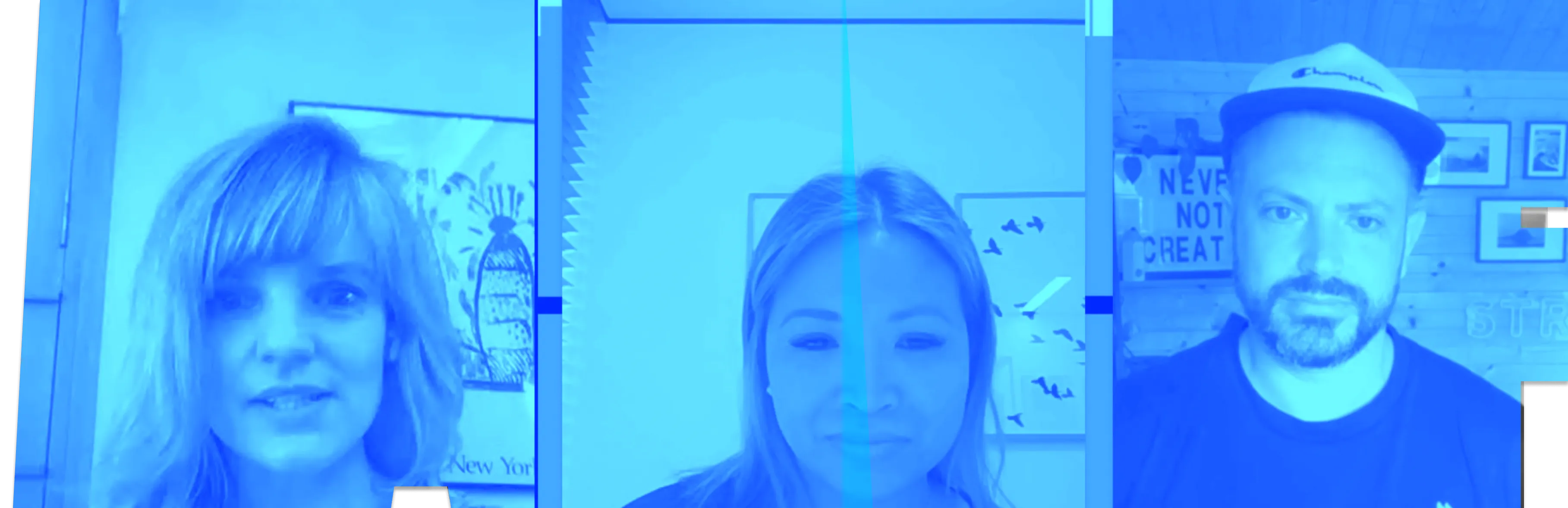
This question was answered by Tarra van Amerongen, Head of Design at Jira Platform, Atlassian, design educator at UTS, and board advisor for the Australian Publishers Association, alongside Ash King, psychologist, cyberpsychology researcher at the University of Sydney, and former music industry creative. The conversation was hosted as part of Never Not Creative's "Asking For A Friend" series, where real questions from the creative community get honest, practical answers.
There Is No One-Size-Fits-All Answer
The honest truth? Nobody can hand you a list of "safe" jobs and tell you which one is yours. As Tarra put it plainly: "I can't tell you because people come from all directions into design." Your skill set is unique, and more importantly, the parts of your work that genuinely energise you are unique too.
The starting point is not a job board. It is a moment of honest self-reflection: what parts of your current role actually light your fire? And which parts leave you cold?
Know What You Actually Love Doing
Tarra used herself as an example: "I don't like admin. I'm not great at delivery. I like the idea generation. I like getting people around a table. I like mobilising teams and getting funding and fixing complex problems."
That kind of clarity is powerful. Once you know what energises you, you can start asking: where else is that skill needed? What industries or roles have demand for exactly that?
It also helps to zoom out and look at the individual crafts within your current role. Tarra noted that many of the things we do day-to-day are actually standalone professions in their own right: "I crafted people coming from globally to an office for two days and what does that experience look like end to end. So is that an events planner? Is that a wedding planner? That's one part of my job I really enjoy and I'm really good at."
The Pool of Adjacent Roles Is Broader Than You Think
One of the most reassuring points from the conversation is just how wide the adjacent role landscape really is. Tool selection, facilitation, event design, team mobilisation, project launches: these are not just tasks. They are crafts that exist in their own right across many industries.
Tarra also made the point that being able to demonstrate adaptability is increasingly valuable: "If you've been able to show that you've been able to pivot or change in the past, then that's probably a really good skill to have," especially now, when things are moving so fast.
Your Strengths Might Be Hiding in Plain Sight
Ash brought a beautifully human insight to the conversation: sometimes the things we are best at are the things we notice least, precisely because they come so naturally to us.
"Some of the things that we just find intuitively easy, we don't notice until someone outside us goes, 'you're actually really good at that,'" Ash said. "And sometimes that can surprise us."
Her suggestion? Have a conversation with a trusted friend or colleague and simply ask: what do you notice as my strengths? The answers might genuinely catch you off guard, and they could point you toward roles you had never considered.
Get Practical About the Path In
Knowing what you want to do is one thing. Getting someone to give you a shot is another. Tarra was refreshingly practical here: think about your networks. Do people already recognise your transferable skills? Is there someone who could advocate for you in a new context?
Not every employer will take a chance on someone without direct experience. But some will, particularly those who value fresh perspective and the ability to adapt. Finding those people, and positioning yourself clearly for them, is part of the work.
Redundancy does not mean your skills are redundant. It means the container they were in has changed shape. The good news is that the things you are genuinely good at, and genuinely love, do not disappear with a job title. They travel with you. The task now is to get curious about where they might take you next.
our guests
Industry Leader

Tarra van Amerongen
Mental Health Expert

Ash King
ashking.com
Host