
ASKING FOR A FRIEND
How do you manage a team well when we work remotely?
ASKING FOR A FRIEND - QUESTION
Ever wondered how to actually manage a remote team well, not just keep the wheels turning, but genuinely support the humans behind the screens? Psychologist and cyberpsychology researcher Ash King and Tarra van Amerongen, Head of Design at Atlassian and UTS innovation design lecturer, break it down with warmth, honesty and hard-won experience. From spotting invisible strain and setting clear expectations, to building real trust through in-person connection, this is practical, people-first advice for anyone leading a distributed team. Whether you are searching for remote team management tips, how to support remote employees, or how to build trust in a remote team, this one is for you.
Remote Teams, Real Connections: How to Manage Well From a Distance
Managing a remote team well is one of the defining leadership challenges of our time. The absence of shared physical space means the usual social cues, the hallway chats, the read-the-room moments, simply disappear. So how do you keep your team connected, supported and performing when everyone is behind a screen?
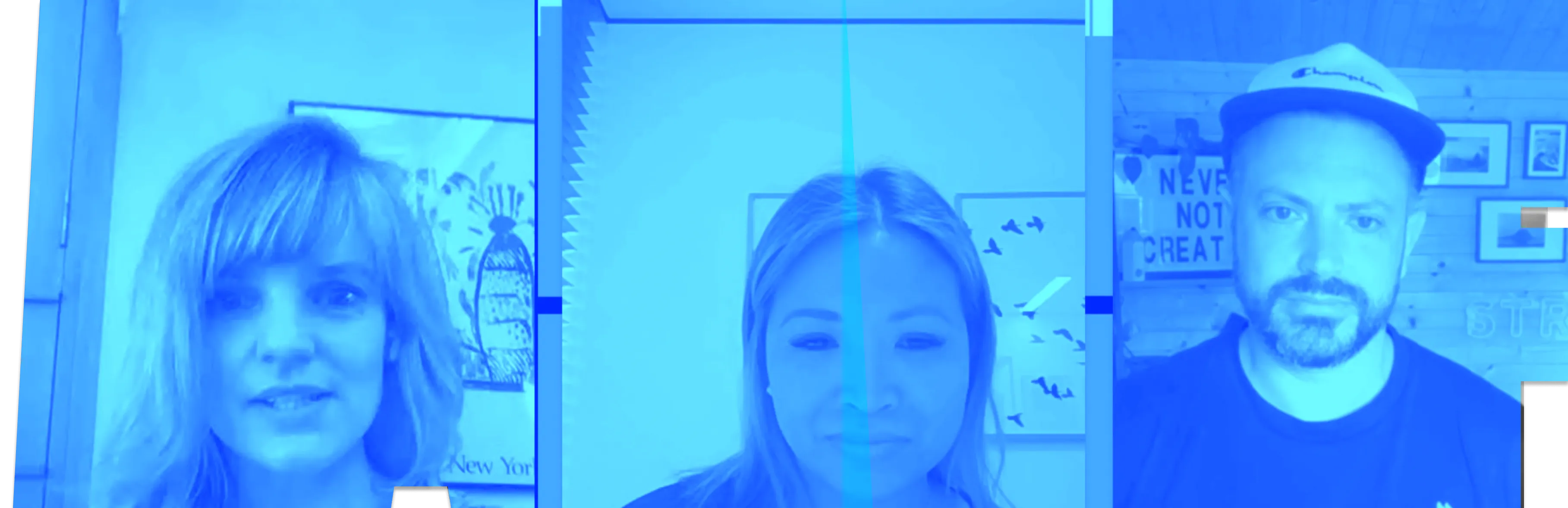
This question was answered by Ash King, psychologist, writer and cyberpsychology researcher at the University of Sydney, and Tarra van Amerongen, Head of Design, Jira Platform at Atlassian and innovation design lecturer at UTS. Both bring a rare combination of lived leadership experience and deep understanding of human behaviour to this conversation. The discussion was hosted on Never Not Creative's "Asking For A Friend" series.
Make Wellbeing Visible on Purpose
Ash, who has worked remotely for over five years, names the core risk clearly: invisible strain. Without the casual cues of shared physical space, leaders have to be intentional about checking in, not just on the work, but on capacity.
Structured check-ins that ask "how are you going?" rather than just "what are you working on?" create space for people to share when life is getting heavy. As Ash puts it, normalising fluctuating capacity is essential, especially in creative industries where output is rarely linear.
Get Explicit About Expectations
Ash highlights that ambiguity is the enemy of remote wellbeing. Things like working hours, response times and what "urgent" actually means can look completely different to different people. Getting clear on these expectations, and communicating them openly, removes the low-level anxiety that builds when people are left to guess.
Watch for Silence
Disengagement in remote teams rarely announces itself loudly. Ash points out that it tends to show up as quiet withdrawal: people becoming less vocal, less present, less forthcoming. Noticing that silence, and gently checking in, is one of the most important things a remote leader can do.
Model the Boundaries You Want to See
This is where both Ash and Tarra are in strong agreement. You can say all the right things about work-life balance, but if you are sending emails at midnight, your team will take their cues from your behaviour, not your words.
Tarra, who openly varies her schedule to be at her kids' soccer games and then works in deep focus blocks when needed, is transparent with her team about this: "When I send you something, I do not expect something in return." That kind of clarity gives people permission to manage their own time and energy honestly.
Build Real Relationships, Even Remotely
Tarra shares a story that really lands. Four years ago, she was leading a team where the managers were asking how people were doing, and getting nothing back. Not because people were unhappy, but because they simply did not know each other well enough to be honest.
Her solution? A week in a share house. People taught each other to paint, sang guitar at midnight, made breakfast together. And when they went back online, the trust was already there. As Tarra puts it, "the trust just explodes when you're able to build those relationships."
In-person time, even occasional, lays a foundation that Zoom simply cannot replicate.
Give People Permission to Step Back
Tarra's approach to time off is worth noting. She tells her team they can take any time they need, as long as it is planned. Her reasoning is simple and generous: "No one makes a memory behind their laptop." When leaders model this attitude, it gives people genuine permission to rest, and to be honest when they are not doing well.
Remote leadership done well is not about surveillance or constant availability. It is about trust, transparency and the willingness to show up as a real human being, even through a screen. Both Ash and Tarra remind us that the fundamentals of good leadership have not changed. They just require a little more intention when the team is scattered across different lounge rooms and time zones.
our guests
Industry Leader

Tarra van Amerongen
Mental Health Expert

Ash King
ashking.com
Host