
ASKING FOR A FRIEND
How do I stop AI raising my expectations of myself to exhausting levels?
ASKING FOR A FRIEND - QUESTION
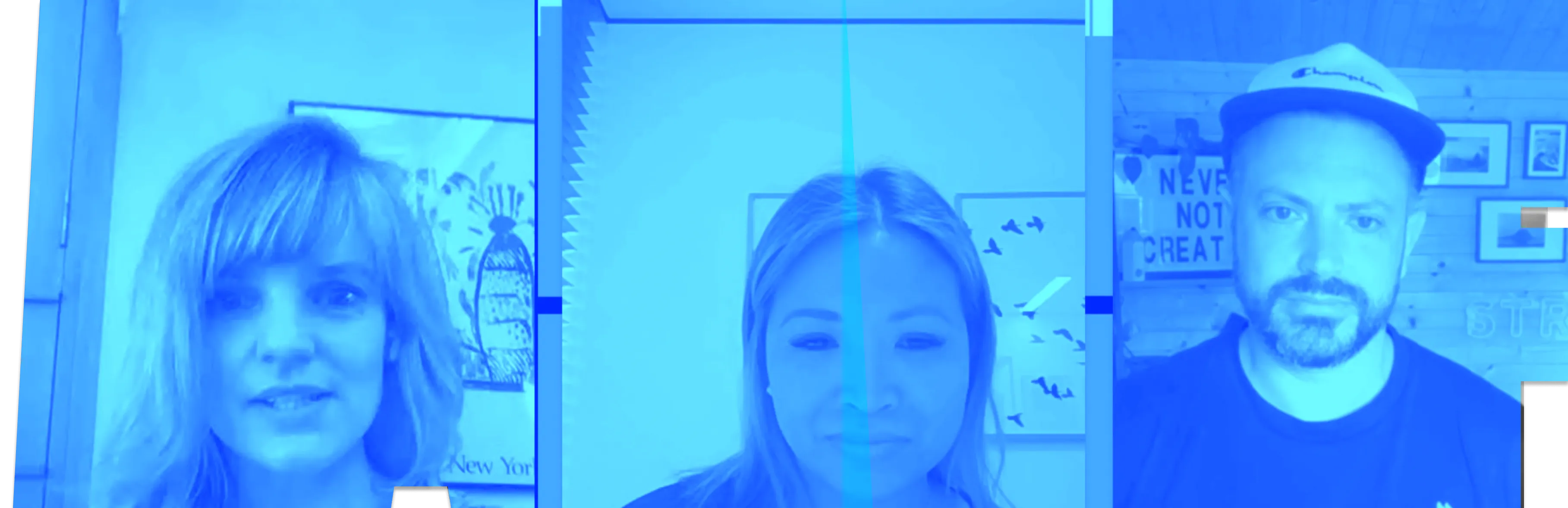
When AI makes you capable of more, it can quietly convince you that you should be doing more, constantly. Sound familiar? In this Asking For A Friend session, mental health expert Sharon Draper and industry leader Quan Payne get refreshingly honest about the exhausting side of AI-driven productivity. Sharon unpacks how AI can amplify perfectionism and productivity-linked self-worth rather than ease your load, while Quan admits the relentless pace of change and the fear of falling behind weighs on him too. Together they land on a genuinely useful shift: use AI to protect your energy, measure yourself by quality and sustainability rather than output, and keep people around you who can tell when you have disappeared down a rabbit hole.
AI promises to make your working life easier. For a growing number of creative professionals, though, it is quietly doing the opposite, raising the bar on what feels possible until exhaustion becomes the baseline.
This question was answered by Sharon Draper, mental health expert, who brings a clinical lens to the way technology intersects with perfectionism and self-worth, and Quan Payne, industry leader, who reflects honestly on the personal and professional pressure to keep pace with rapid AI-driven change. Andy Wright, host of Asking For A Friend on Never Not Creative, guided the conversation.
Faster output is not the same as more capacity
Sharon's first instinct is to ask a simple but clarifying question: is AI actually reducing your workload, or just expanding what you feel obliged to produce? A faster output does not mean you have capacity for more, she points out. The energy required for genuine creative thinking remains constant regardless of how quickly a tool can help you execute. Keeping an eye on the moving goalpost is critical. If every efficiency gain simply resets your baseline upward, you will never feel like you have arrived anywhere.
AI amplifies what is already there
Sharon is careful to note that AI is rarely the root cause of exhaustion. Instead, it acts as an amplifier. If perfectionism, overachievement, or a tendency to tie self-worth to productivity are already present, AI gives those patterns more fuel. The tool is not the problem. The patterns underneath are worth examining.
The hamster wheel of keeping up
Quan reflects on how confronting the pace of AI change genuinely is, and admits he relates personally to everything Sharon described. For him, the draining part is not change itself but the uncertainty of where it ends and the industry narrative that falling behind means becoming obsolete. He reframes the challenge: rather than chasing every development, the goal is sustainable self-investment, becoming a better version of yourself over time rather than sprinting to match an ever-shifting frontier.
Measure by quality, not volume
The sharpest takeaway from this session is Sharon's closing reframe: try to measure success by the quality and sustainability of your work, not by how much you can produce. AI makes volume easy. That is precisely why volume should stop being the metric.
Having people around you who can notice when you have gone too far down the rabbit hole, as Andy puts it, matters too. Sustainable practice is rarely a solo effort.
our guests
Industry Leader

Quan payne
Studio Payne
Mental Health Expert

Sharon Draper
The Conscious Project
Host