ASKING FOR A FRIEND
How do I balance caring for a loved one, avoiding burnout and managing demands / perception at work?
ASKING FOR A FRIEND - QUESTION
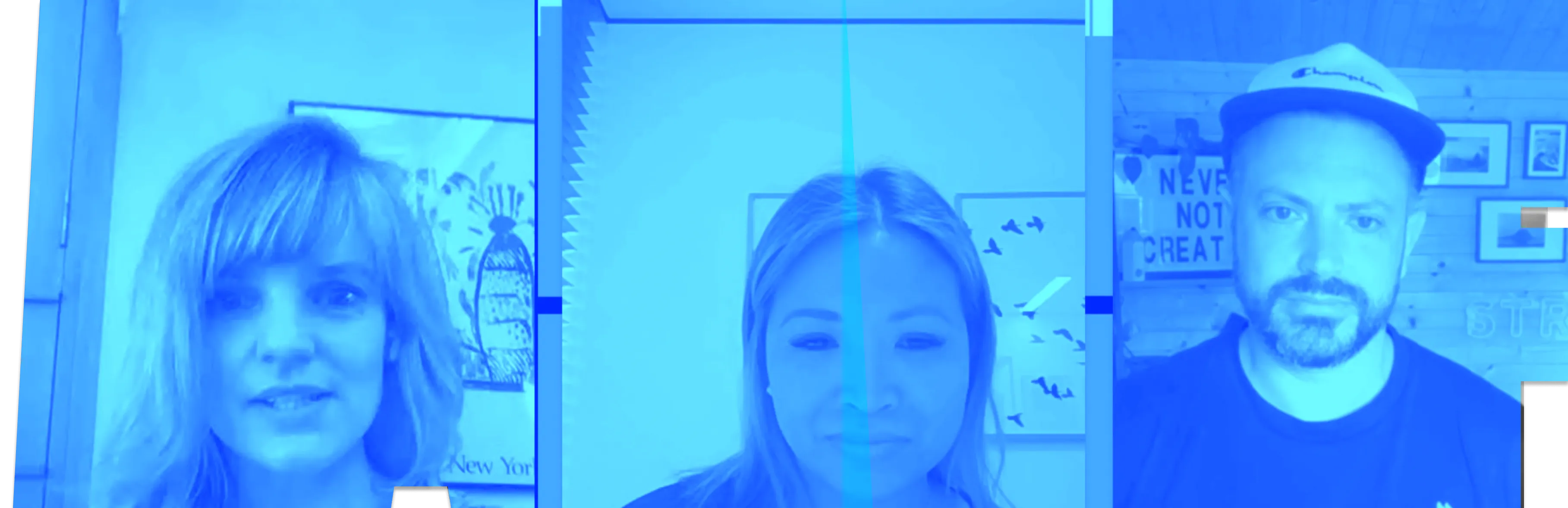
Ever tried to hold down a demanding job while caring for a seriously unwell loved one? This piece, drawn from Never Not Creative's "Asking For A Friend" series, brings together Ash King, Psychologist and Cyberpsychology Researcher at the University of Sydney, and Tarra van Amerongen, Head of Design at Atlassian and Mental Health First Aider, to answer exactly that question. From navigating team dynamics and misread comments, to knowing when to ask for a break and why transparency at work is a genuine superpower, this is warm, practical advice for anyone trying to keep it all together without falling apart. Also relevant if you're searching: how to avoid burnout while caregiving, managing work perception during personal crisis, or how to ask for leave without guilt.
When Caring for Someone You Love Starts to Cost You at Work
You are doing everything right, and somehow it still feels like it is not enough. You are reshuffling hours, working early mornings and late nights, keeping all the plates spinning, and yet a comment from a colleague lands like a small grenade. Sound familiar?
This question was answered by Ash King, Psychologist, Writer and Cyberpsychology Researcher at the University of Sydney, whose work sits at the intersection of mental health, creativity and everyday human experience, and Tarra van Amerongen, Head of Design, Jira Platform at Atlassian, design leader, educator and Mental Health First Aider, who brought her own lived experience of navigating serious illness while working. The conversation was hosted on Never Not Creative's "Asking For A Friend" series.
You Are Running a Double Shift (Even If No One Can See It)
Ash was clear on this from the start: caring for a seriously unwell loved one while maintaining your workload is the equivalent of working a double shift. The labour is real, even when it is invisible to the people around you.
"That's not invisible work," Ash said, "even though some people aren't really able to see that and acknowledge the value of it."
If colleagues have made comments about having to "step up while you're away," Ash's read is that this is likely less about blame and more about felt pressure on their end. The distinction matters, because it changes how you respond.
Reframe the Conversation: Us Against the Problem
Rather than letting tension simmer, Ash recommended bringing it into the open, but framing it as shared problem-solving rather than a confrontation.
"It's not me against you, it's us against the problem."
In practice, this means sitting down with your team and putting everything on the table: how you have been flexing your hours, what is actually being impacted, and what solutions might help everyone. You might clarify when you are available, how your schedule is shifting, and what support looks like going forward. The goal is to move from assumption to shared understanding.
Your Nervous System Is Telling You Something True
When you are already stretched thin, your threat radar goes up. Comments that might have felt neutral on a good day can read as criticism or digs when you are depleted. Ash named this directly.
"When you're going through hard stuff, when you're already drained, your nervous system is heightened. It's more likely that you're going to see digs and offense and criticism in places that potentially could have felt more neutral to you when you were feeling stronger."
This is not a character flaw. It is biology. And it is a signal worth paying attention to.
Taking a Break Is Preventative, Not a Retreat
If you are already noticing early burnout signals, that is data. Ash framed taking a break now as the wise, strategic move, not a sign of weakness or making things "bigger than they need to be."
"You might want to frame it around taking a short break now so that you don't hit a wall later."
Choosing to step back before you hit the wall means you are more likely to be able to continue both your work and your caring responsibilities. Burning out completely helps no one.
Transparency Is a Superpower (Tarra's Story)
Tarra brought something powerful to this conversation: her own experience of working through breast cancer. She was offered flexibility, but only because she was transparent about what was happening.
"You only get that when you're transparent."
She described working four days a week, spending one day in hospital, and shifting to work that had softer deadlines and could be done independently. This reset expectations with her team and reduced the pressure she was putting on herself, while still allowing her to feel connected and contributing.
Her broader point was this: everyone is going through something, has gone through something, or will go through something. The mask we wear at work, the "I'm great, everything's great" performance, costs us more than honesty does.
"Always lead with good intent. Your colleagues are probably trying to cover for you because they love you and you do great work."
Guilt Has a Way of Distorting What We Hear
The host made a sharp observation near the end: when you are feeling guilty, you go looking for evidence of that guilt. A neutral comment becomes a dig. A colleague's frustration becomes confirmation that you are failing.
Ash agreed. The antidote is not to toughen up, it is to get the full picture by having the actual conversation, rather than filling in the gaps with your worst fears.
You are not making this bigger than it needs to be by recognising that you need a moment to breathe. You are being honest about your limits, and that is one of the most useful things you can do, for yourself, for your team, and for the person you are caring for. Be kind to yourself. You are carrying a lot.
our guests
Industry Leader

Tarra van Amerongen
Mental Health Expert

Ash King
ashking.com
Host