ASKING FOR A FRIEND
How can I make peace with myself when pressured to use AI at work?
ASKING FOR A FRIEND - QUESTION
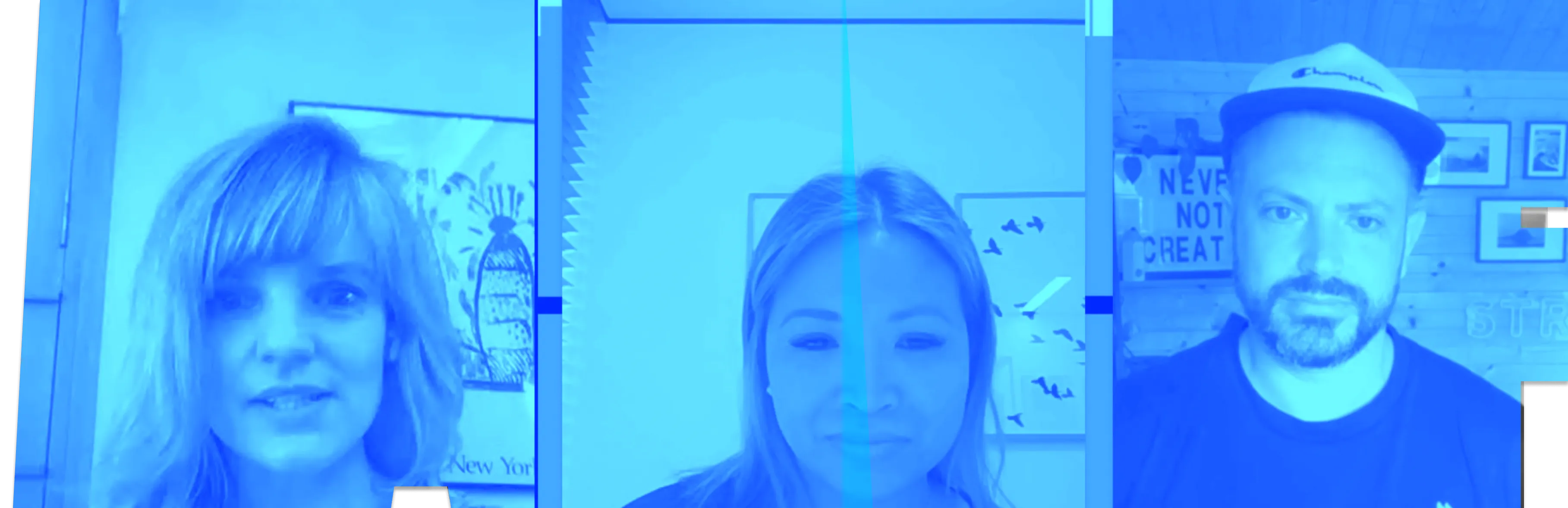
Can you make peace with yourself when you're being pressured to use AI at work, but it feels ethically or environmentally off? It's a question more people are asking than you might think. In this Asking For A Friend session, Christopher Doyle, award-winning brand and design expert with over 20 years of industry experience, and Dr. Aileen Alegado, registered clinical psychologist and Director of Mindset Consulting, get genuinely honest about the tension between workplace culture and personal values. No tidy answers here, just real talk about masking, environmental concern, the cost of going along with things that don't sit right, and why curiosity is sometimes enough. If you've been quietly wrestling with this one, you're in good hands.
When Your Values and Your Job Don't Quite Line Up
Some questions don't have a clean answer, and this is one of them. If you've been feeling quietly conflicted about using AI at work, pulled between what your boss expects and what your gut is telling you, you're in very good company. The discomfort you're feeling isn't weakness. It's actually a sign that you're paying attention.
This question was answered by Christopher Doyle, brand and design expert with over 20 years of experience at some of Australia's leading agencies, and Dr. Aileen Alegado, registered clinical psychologist and Director of Mindset Consulting, specialising in corporate professionals and high performers. The conversation was hosted as part of Never Not Creative's Asking For A Friend series, where real questions from the creative community get honest, thoughtful responses.
You're Not the Only One Wrestling With This
Chris is refreshingly candid: this is the thing he thinks about most when it comes to AI, more than its impact on his business or his creativity. "Do I want to participate in this?" he says, and that question is landing for a lot of people right now. He's noticed a significant wave of concern, particularly among younger people, around the environmental cost of AI, and it's growing fast. Knowing that others, including people who use AI professionally every day, are sitting with the same tension can make it feel a little less isolating.
The Pressure to Go Along With It Is Real
Chris doesn't pretend this is easy to navigate. When something gets culturally adopted in a workplace and it doesn't sit right with your personal ethics, "it's really hard to not participate in that." The obvious answer, just quit and find somewhere better aligned, runs straight into the reality that there aren't many roles out there, and the one you're in, flawed as it feels, might still be the best option available. That's a genuinely hard place to be, and it deserves to be named as such.
Masking Your Values Has a Cost
Aileen brings a clinical lens to this that's worth sitting with. She references research on masking in the workplace, the effort of suppressing who you are or what you believe in order to fit in, and notes it can consume up to 30% of your brain power. If your value system is rubbing the wrong way, she says, "this job is going to take away from you." That's not a small thing. It's worth knowing what it's actually costing you, even if you're not ready to act on it yet.
It Doesn't Have to Be a Yes or No
One of the most useful reframes in the conversation comes from the host, who suggests thinking about it the way you might approach other environmental trade-offs. He books flights and pays to offset the carbon. He's exploring ways to show users the carbon footprint of an AI query alongside its cost, so people can make more conscious choices. The point isn't perfection. It's about asking: what do I feel comfortable doing right now, and where are my actual limits? As he puts it, "I don't think it has to be a yes or no."
Curiosity Is Enough for Now
Aileen offers something genuinely reassuring here. Not every internal conflict needs to resolve into a decision. "It doesn't have to result in anything other than curiosity," she says. She draws a comparison to plastics: humanity didn't know how damaging they were until much later, and we're still catching up. Asking these questions, sitting with the discomfort, noticing what matters to you, that's healthy. It's how values get clarified over time, not in a single anxious moment.
Some People Are Choosing to Step Away, and That's Valid Too
Chris mentions a conversation he had with illustrator and icon designer Kate Wolf, who had her role at Pinterest replaced by the very AI agent she'd been working on. Her response was to actively move away from AI, and that choice is important and legitimate. There's room for different positions on this. What matters is that yours is genuinely yours, not just the path of least resistance.
Have Some Compassion for Yourself
Aileen closes with something worth returning to when the guilt gets loud. "Have some compassion for yourself," she says, "that this is a normal way of questioning, asking, growing as a person." The world is changing faster than any of us can fully process. You're not failing by finding it hard. You're just human, doing your best in a situation that doesn't come with a clear instruction manual.
Making peace with using AI at work when it conflicts with your values isn't a problem you solve once and move on from. It's something you keep revisiting as the technology changes, as your workplace evolves, and as your own thinking gets clearer. For now, it's enough to know what you value, to notice what it costs you to set that aside, and to give yourself permission to find your own line, wherever that ends up being.
our guests
Industry Leader

Chris Doyle
Christopher Doyle & Co.
Mental Health Expert

Dr Aileen Alegado
Mindset Consulting
Host